Plenary Speakers
The plenary speaker schedule will be updated over the next few weeks. Please check back.
Day 1
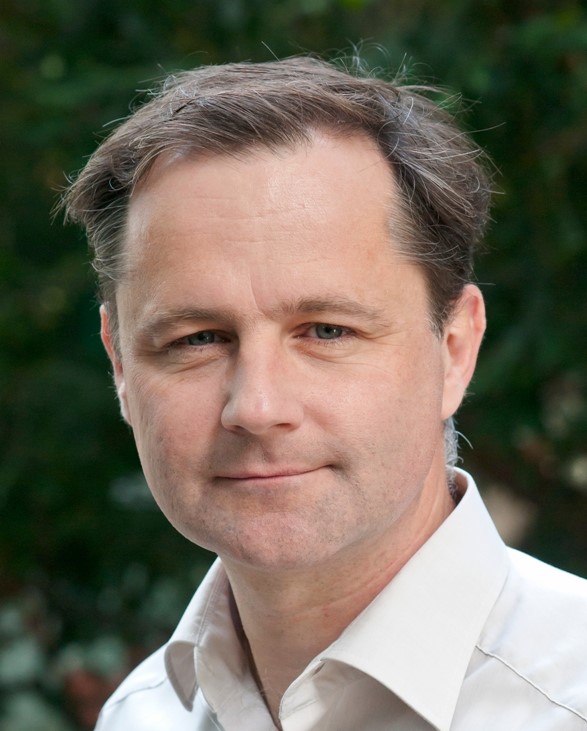
Pavel Zahorik
Using psychoacoustic approaches to understand and predict perception of sound in rooms
Room acoustics critically shape our perceptual listening experience. They can make or break musical performances or be the difference between successful and unsuccessful speech communication. Scientific study of room acoustics has identified a variety of metrics that describe various physical acoustic properties of rooms (e.g., ISO 3382), and many of these metrics have subsequently been shown to be associated with specific perceptual aspects of sound in rooms. Because the associations are complex and multidimensional, it is often difficult to conclusively link physical room-acoustic metrics to perception, however. Over the past half century, the field of psychoacoustics has developed and validated computational modeling techniques that describe and predict the function of the human auditory system at various mechanistic levels. The purpose of this talk is to suggest and to show that incorporating psychoacoustic modeling techniques into the associative process between physical room acoustics and perception can be hugely beneficial. A primary advantage of this approach is that it inserts a level of automaticity into the associative process that allows for many more associations to be explored and predicted. Additional advantages include the ability to flexibly examine effects of different source materials, dynamics, and listener characteristics, including the effects of hearing impairment and listening with hearing devices.
Pavel Zahorik is a Professor in the School of Communication Sciences and Disorders at the University of Central Florida, where he is proud to be part of a dynamic and growing research team at the Communication Technologies Research Center. From 2003 to 2023, Pavel was a faculty member at the University of Louisville, where he held the Heuser Hearing Research Professorship since 2013. He has studied human perception and performance in sound-reflective environments for over 25 years and has been funded by the NIH, the Air Force Office of Scientific Research, and Sonova. He is a Fellow of the Acoustical Society of America (ASA) and is currently the Associate Editor for the Journal of the Acoustical Society of America – Psychological Acoustics Technical Area.

Trimpin
Engaging the room: Contraptions for Art and Sound
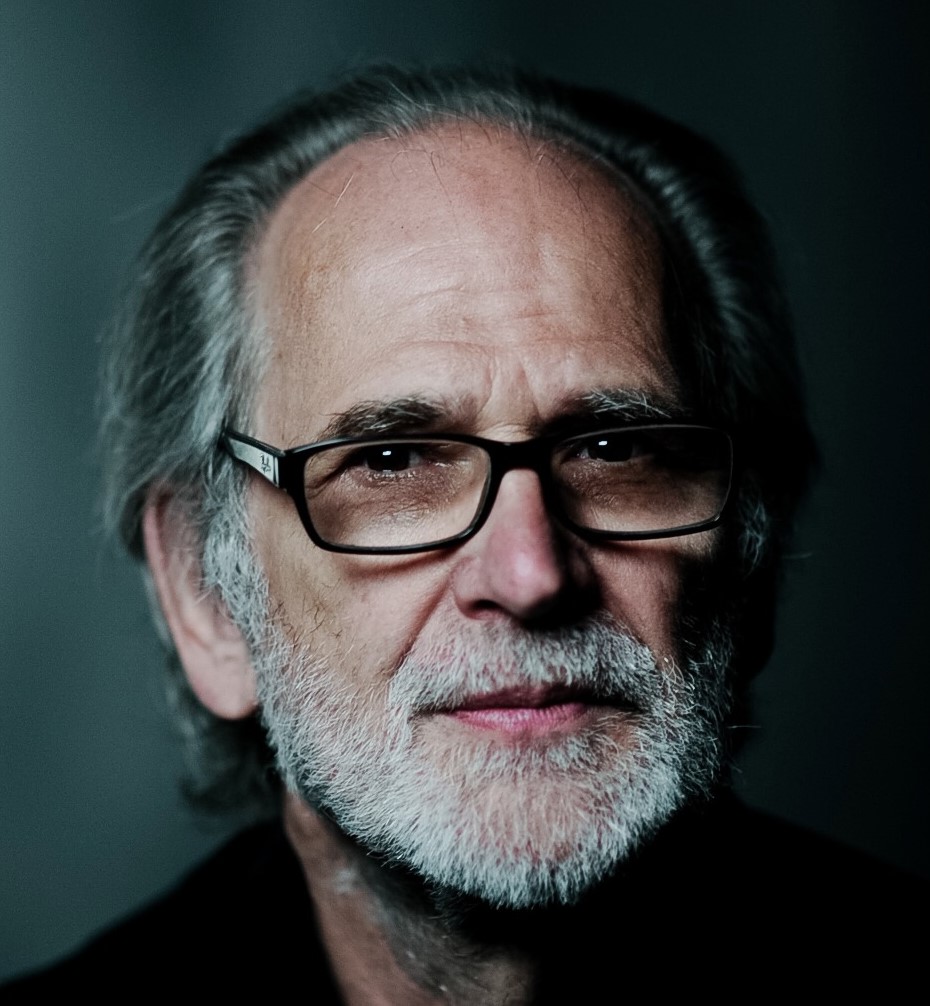
Trimpin is an internationally renowned artist and composer whose work integrates sculpture and sound across a variety of media including fixed installation, live music, theater, and dance performance. His ingenious sound art installations, which typically feature the acoustics of everyday objects with computer controlled actuators, have been commissioned throughout Europe and North America. Based in the Pacific Northwest, Trimpin is a regular artist in residence at the California Institute of the Arts, Stanford’s CCRMA, and the MIT Center for Arts, Science, and Technology. He has collaborated with the playwright Samuel Becket, composer Conlan Nancarrow, and the Kronos Quartet, among others. He is a MacArthur Fellow and the subject of the 2011 Peter Esmonde documentary “Trimpin: the Sound of Invention”.
Day 2 & 3
Margriet Lautenbach
Room acoustics for classical halls: Practice, theory and music
In generative acoustic design, numerical methods are not used to test the acoustic behavior of a given scene, but rather to identify an acoustic scene that optimally produces a sound field with certain predefined characteristics. While this is a well-established practice in other disciplines such as architecture or structural design, it is only recently that several approaches have been explored in the field of room acoustics. These include (a) combining a generator with forward simulation and iterative optimization, (b) implementing differentiable geometric acoustic simulation and backpropagation from a target design, and (c) optimizing a wave-theoretic numerical solution to infer the geometry and boundary conditions that optimally generate a desired sound field. The talk will give examples of each of these approaches, discuss the challenges, and highlight the future potential for room acoustic design.
Margriet Lautenbach is a room acoustic consultant for over 20 years. She has been investigating the use of calculation and scale models research as design tools. She was lead acoustician, or collaborated, in the design for the renovation of several theatres, opera halls and concert halls, such as Royal Theatre Carré Amsterdam, De Doelen concert hall Rotterdam, the Concertgebouw Amsterdam, the state opera in Berlin and the opera in Cologne. The experience from renovation projects with their possibility to compare models with the existing halls through measurements was of great advantage for the design of new
concert halls as The Kulturpalast in Dresden, Parkzaal Musis in Arnhem and Casals Forum in Kronberg (Frankfurt).
Margriet has worked at Peutz from 2003 until 2022. In 2024 Margriet founded her own company Acoustic Reflections, as part of a not for profit organization with the mission: “More trees, more silence and more music”. Since 2019 Margriet is president of the Netherlands Acoustical Society and she teaches
room acoustics at the Higher Course in Acoustics in Antwerp.
Stefan Weinzierl
Generative design as a solution for room acoustic problems
In generative acoustic design, numerical methods are not used to test the acoustic behavior of a given scene, but rather to identify an acoustic scene that optimally produces a sound field with certain predefined characteristics. While this is a well-established practice in other disciplines such as architecture or structural design, it is only recently that several approaches have been explored in the field of room acoustics. These include (a) combining a generator with forward simulation and iterative optimization, (b) implementing differentiable geometric acoustic simulation and backpropagation from a target design, and (c) optimizing a wave-theoretic numerical solution to infer the geometry and boundary conditions that optimally generate a desired sound field. The talk will give examples of each of these approaches, discuss the challenges, and highlight the future potential for room acoustic design.
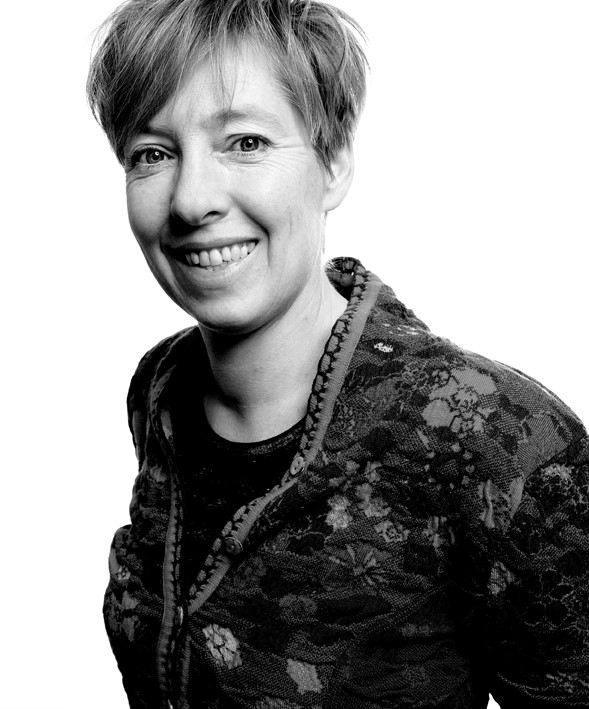
Stefan Weinzierl is head of the Audio Communication Group at the Technische Universität Berlin. His research focuses on audio technology, virtual acoustic reality, room acoustics, and musical acoustics. He coordinates a master’s program in Audio Communication and Technology at TU Berlin. With a diploma in physics and sound engineering, he received his Ph.D. in musical acoustics from TU Berlin. He has coordinated international research consortia in the fields of virtual acoustic reality (SEACEN) and music information retrieval (ABC_DJ), and is a valued consultant for room acoustics in the construction and renovation of theaters and concert halls.